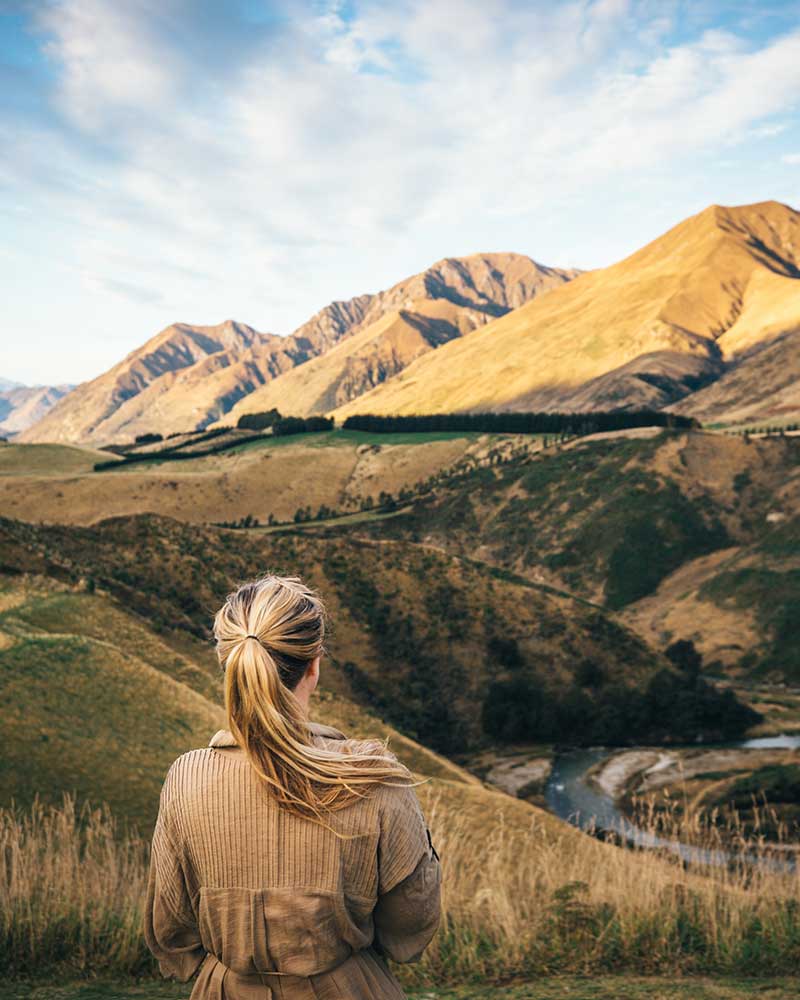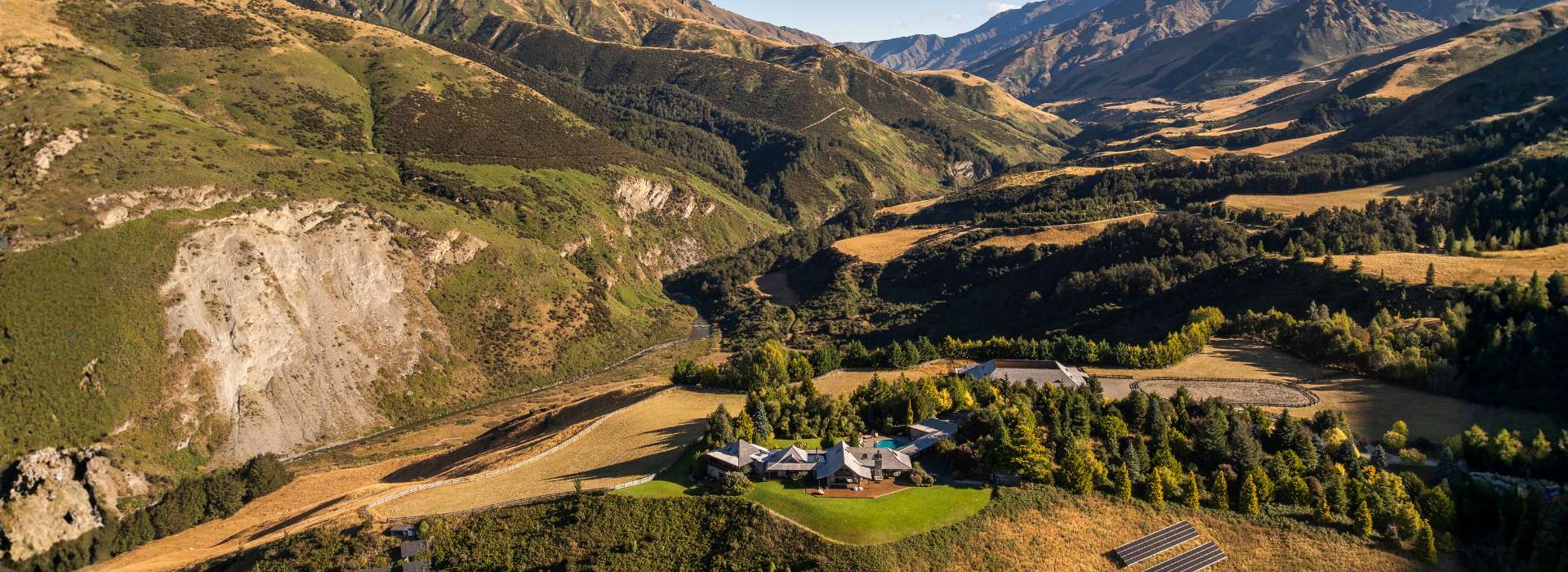
Mahu Whenua, translating to ‘heal the land’ in Māori, provides a peaceful sanctuary where guests can connect with nature. The land consists of four high country sheep stations – Motatapu, Mt Soho, Glencoe and Coronet Peak – stretching between Wanaka and Queenstown over 136,000 acres, and boasts some of New Zealand’s most iconic alpine scenery, rich with cultural and environmental significance.
Historically, Mahu Whenua’s landscapes have witnessed pivotal moments. The valley, known as Motatapu, meaning ‘sacred river’ in Māori, holds deep cultural significance, with evidence of sporadic Māori occupation for seasonal hunting and gathering and for the movement of Pounamu (greenstone) from Lake Wanaka to Lake Wakatipu. Early European explorers didn’t find their way to the Motatapu Valley until 1858-9 when Edward Jollie and William Young ventured in, mapping the area and attempting to find routes through the rugged terrain. The subsequent gold rush of 1862 brought thousands of miners to the area, who forged up the valley and scoured the rivers in search of gold. Their legacy is etched into the landscape, and you can still find the historic mining huts and mining remnants hidden along the riverbanks.
In 2015, more than 90% of the land was placed under protective covenants under the Queen Elizabeth the Second Trust, making it the largest conservation undertaking on private land in New Zealand’s history. Mahu Whenua embodies a commitment to restoring a magnificent expanse of New Zealand’s high country to its pristine, native state.
Once dominated by high country farming, today the land is undergoing a remarkable transformation. The comprehensive conservation and regeneration program has included the planting of over 1.5 million native trees, each one a vital step towards restoring the land’s indigenous ecosystem. Dedicated breeding and release programs have also ensured the return of native birdsong echoing through the valley, and bee populations have been encouraged to thrive. Explore Mahu Whenua firsthand – a place where history, conservation, and natural beauty come together.